

Only producers and foods exempt from inspection under Ohio regulations may be listed for trade on Farmerhood Market.
Disclaimer: Summaries of relevant requirements are listed below, but it is each producer's responsibility to be familiar and in compliance with any relevant regulations.
Ohio Regulations

Local Honey
Beekeepers producing jars of honey that are composed of 75% of honey from their own hives at minimum will be exempt from the “food processing establishment” licensing, registration and mandatory inspection requirements.
(https://ofbf.org/app/uploads/2024/04/Ohio-Small-Scale-Food-Business-Guide.pdf p 27)
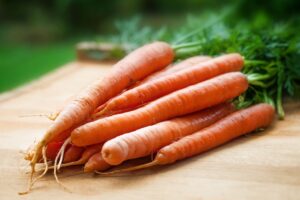
Unprocessed produce (fruits, vegetables, and herbs)
Farms that have an average annual income of $25,000 or less over the previous three-year period are exempt from inspection requirements.
NOTE: “Unprocessed” means rinsed and roughly trimmed only (not washed.)
(https://ofbf.org/app/uploads/2024/04/Ohio-Small-Scale-Food-Business-Guide.pdf p 34)
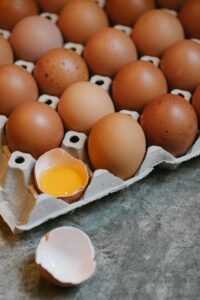
Fresh eggs
Egg producers with a flock of 3,000 hens or less, or producers who sell directly to household consumers are exempt from the AMS regulations.
(https://ofbf.org/app/uploads/2024/04/Ohio-Small-Scale-Food-Business-Guide.pdf p 42)
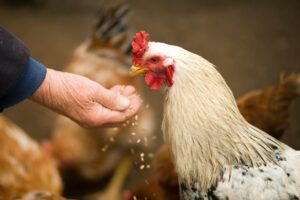
Local pountry
Processors that grow and slaughter poultry on their own property may be exempt from licensing and inspection requirements when they meet the following requirements:
- Less than 1,000 birds are grown and processed annually;
- The birds are hatched and raised on the premises;
- Birds are slaughtered and processed on the premises
Requirements
- Only sound and healthy birds are slaughtered for consumption;
- Poultry is sold directly to a hotel, institution, restaurant consumer, or other person for preparation in their own kitchen
- Facilities producing poultry products for sale under this exemption may only sell their product within Ohio and must comply with facility sanitary standards and practices that result in food fit for human consumption
NOTE: Producers that wish to sell poultry directly from the farm under this exemption need to first label their products with their name and address
(https://ofbf.org/app/uploads/2024/04/Ohio-Small-Scale-Food-Business-Guide.pdf pp 57-58)
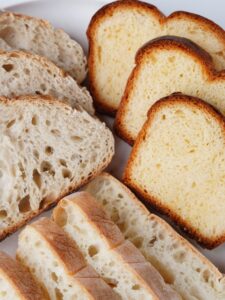
Cottage Goods
Permitted Cottage Goods
- Non-potentially hazardous bakery products (such as cookies, breads, brownies, cakes, fruit pies, etc.);
- candy (including no-bake cookies, chocolate covered pretzels or similar chocolate covered non-perishable items),
- jams; jellies; fruit butters;
- granola (including granola bars and granola bars dipped in candy; if fruit used must be commercially dried);
- popcorn (including flavored popcorn, kettle corn, popcorn balls, caramel corn, but does not include un-popped popping corn);
- unfilled baked donuts;
- waffle cones; pizzelles;
- dry cereal and nut snack mixes with seasonings;
- roasted coffee (coffee may be whole beans or ground);
- dry baking mixes (for making items such as breads and cookies);
- dry herbs and dry herb blends; dry seasoning blends (such as dry barbecue rubs and seafood boils); dry tea blends;
- flavored honey made by a beekeeper exempt under ORC 3715.012;
- fruit chutney;
- maple sugar made by a processor of tree syrup exempt under ORC 3715.012;
- and dry soup mixes containing commercially dried vegetables, beans, grains, and seasoning.
Items Not Permitted
A “Cottage Food production Operation” is not permitted to process acidified foods, low-acid canned foods, potentially hazardous foods or not potentially hazardous foods not listed above.
- Low acid food means any food with a finished equilibrium pH greater than 4.6 and a water activity greater than 0.85.
- Acidified food means a low acid food to which acids or acid foods are added (Ex. Beans, cucumbers, cabbage, puddings, etc.).
- Potentially hazardous food means it requires temperature control because it is in a form capable of supporting the rapid and progressive growth of infectious or toxigenic microorganisms (Ex. Raw or cooked animal products, cooked vegetables, garlic in oil, cheesecakes, pumpkin pies, custard pies, cream pies, etc.).
- Freeze-drying is not permitted as a “Cottage Food Production Operation”.
Requirements
“Home” means the primary residence occupied by the residence’s owner, on the condition that the residence contains only one stove or oven used for cooking, which may be a double oven, designed for common residence usage and not for a commercial usage, and that the stove or oven be operated in an ordinary kitchen within the residence.
A “Cottage Food Production Operation” is required to label all of their food products properly, which include the following information on the label of each unit of food product offered or distributed for sale:
(Editable labels can be found here. Make a copy of the google doc, customize your labels, and print on 2″x4″ shipping labels.)
- Statement of Identity – the name of the food product
- Net Quantity of Contents – the net weight, in both U.S. Customary System (inch-pound system) and International System (metric)
- Ingredient List – ingredients of the food product, listed in descending order of predominance by weight;
- Statement of Responsibility – the name and address of the business;
- The following statement in ten-point type: “This Product is Home Produced.”
NOTE: If nutrient content claims (i.e. low fat, salt free, etc.) or health claims (i.e. may reduce heart disease) are made, the product must bear all required nutritional information in the form of the Nutrition Facts panel. All labeling components are to comply with 21 CFR Part 101, Food Labeling.
(https://agri.ohio.gov/divisions/food-safety/resources/cottage-food)